
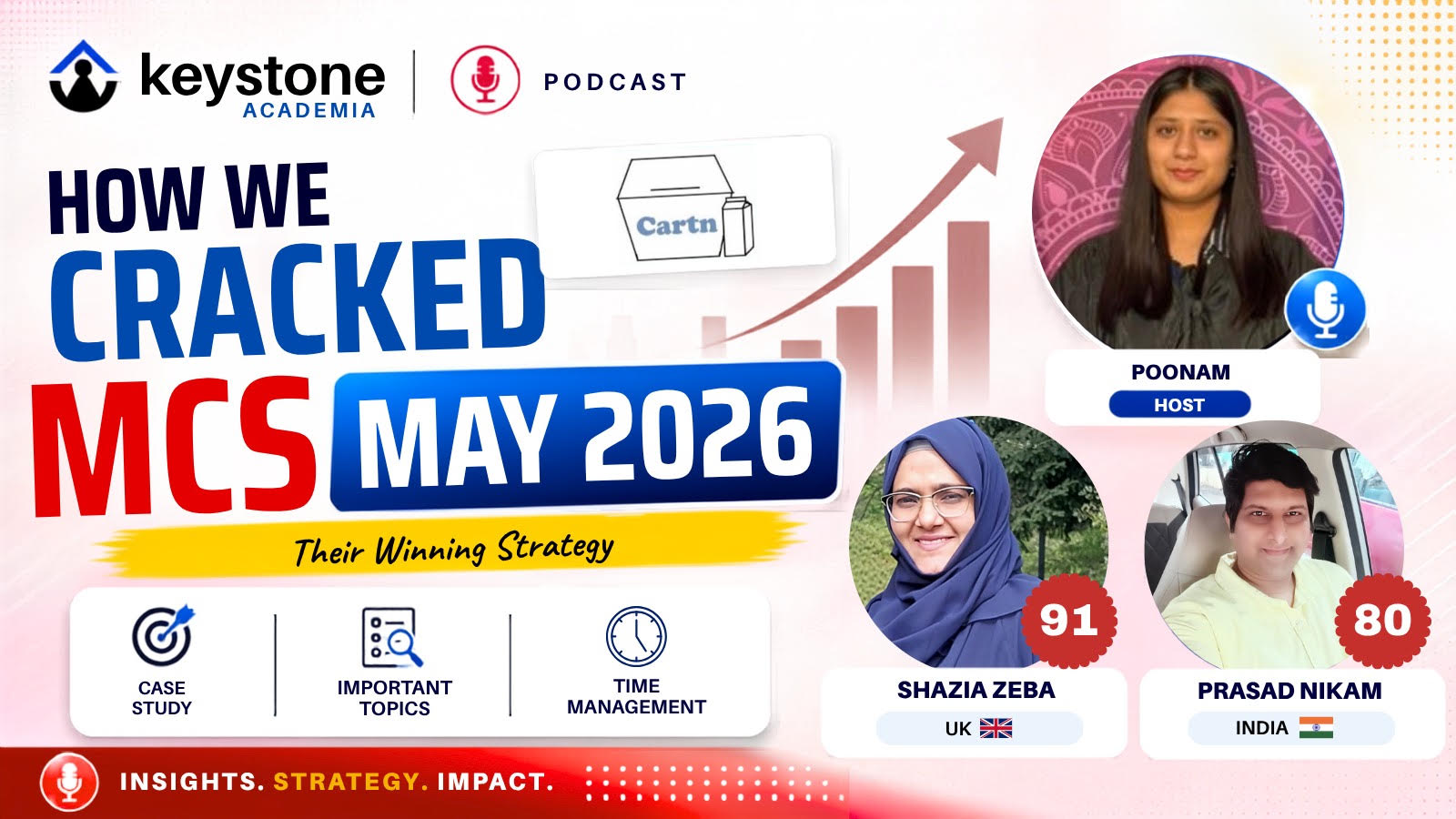
After weeks of preparation, your performance on exam day comes down to one thing:
Can you apply your knowledge under pressure?
Many students know the syllabus well enough to pass but lose marks because they panic, spend too long on one requirement, or fail to answer exactly what the examiner is asking.
Both Shazia and Prasad stressed that success is not just about knowledge. It is about staying calm, managing your time, and thinking like a Finance Manager throughout the exam.
Understand the Structure of the MCS Exam
The CIMA Management Case Study is a 3-hour computer-based exam based on the CARTN pre-seen company.
During the exam you will receive unseen information that builds upon the pre-seen.
Your job is not to repeat textbook knowledge.
Instead, you must analyse the new information, evaluate the situation, and make commercially sound recommendations supported by evidence.
Every answer should demonstrate that you can think and communicate like a Finance Manager.
Read Before You Type
One of the most common mistakes students make is typing immediately after opening a task.
Resist the temptation.
Spend the first few minutes understanding exactly what the examiner wants.
Ask yourself:
- What is the requirement?
- Which Management Level topics apply?
- Which information in the unseen is most important?
- Which parts of the pre-seen support my answer?
- What business problem am I solving?
A well-planned answer usually scores higher than a rushed one.
Use the 45-Minute Framework
Although every exam is different, the passed students recommended following a simple structure for each section.
Minutes 0–7
Read the requirement carefully.
Highlight:
- Action verbs
- Financial information
- Risks
- Stakeholders
- Business objectives
Do not begin writing yet.
Minutes 7–10
Create a quick outline.
List:
- Main headings
- Key recommendations
- Supporting evidence
- Relevant business frameworks
A simple plan keeps your answer focused.
Minutes 10–30
Focus on the higher-weighted requirement first.
Support every recommendation with:
- Evidence from the unseen
- Knowledge from the pre-seen
- Commercial reasoning
- Financial implications
Minutes 30–40
Move to the remaining requirement.
Avoid repeating previous points.
Keep your answer practical and relevant.
Minutes 40–45
Review your response.
Check:
- Did you answer every requirement?
- Have you justified your recommendations?
- Did you mention the business impact?
- Are there obvious spelling or formatting errors?
Five minutes of reviewing can save valuable marks.
Always Answer the Requirement
One of the biggest reasons students lose marks is because they answer the topic instead of the question.
For example, if the examiner asks:
“Evaluate whether CARTN should invest in new production equipment.”
Do not spend half your answer explaining investment appraisal techniques.
Instead discuss:
- Benefits
- Risks
- Financial implications
- Operational impact
- Stakeholder considerations
- Recommendation
Everything should relate directly to CARTN.
Support Every Recommendation
A recommendation without justification is weak.
Instead of writing:
“CARTN should automate production.”
Write:
“CARTN should consider automating parts of its production process to improve efficiency, reduce labour costs, minimise quality variations and strengthen long-term profitability. Management should also assess the capital investment required and potential implementation risks before proceeding.”
Notice how the recommendation explains:
- What
- Why
- Benefits
- Risks
This demonstrates commercial thinking.
Think Beyond Finance
Finance Managers do not only think about numbers.
Every recommendation should consider:
- Customers
- Employees
- Suppliers
- Shareholders
- Regulators
- Sustainability
- Operational capability
- Strategic objectives
Balanced answers generally score better than purely technical answers.
Common Mistakes to Avoid
From the podcast, several recurring mistakes emerged.
Avoid these:
- Memorising mock answers
- Ignoring the pre-seen
- Spending too long on one task
- Writing generic textbook definitions
- Forgetting stakeholder impacts
- Ignoring financial consequences
- Running out of time
- Not practising timed mock exams
Small mistakes can have a significant impact on your final score.
Managing Exam Anxiety
Almost every successful student experiences nerves before entering the exam.
That is completely normal.
Instead of worrying about what you do not know, focus on what you have prepared.
Before the exam:
- Sleep well the night before.
- Arrive early.
- Read instructions carefully.
- Stay hydrated.
- Trust your preparation.
- Do not compare yourself with other students.
Remember, the examiner is not expecting perfection.
They are assessing your ability to make professional business decisions.
Frequently Asked Questions
Is the CARTN pre-seen the same for the August 2026 exam?
Yes. The August 2026 MCS sitting is based on the CARTN pre-seen company released by CIMA. Make sure you understand the business model, industry, risks, stakeholders and financial information before exam day.
Can I pass CIMA MCS in four weeks?
Yes, if you already have a solid understanding of the Management Level syllabus and follow a structured study plan with consistent mock exam practice.
How many mock exams should I attempt?
Quality is more important than quantity. Complete enough timed mock exams to become comfortable with applying your knowledge, then review every piece of feedback carefully.
What is the most important subject for MCS?
All three pillars are important because the exam integrates E2, P2 and F2. However, many students find F2 technically more challenging, so it often requires additional revision.
Should I memorise model answers?
No.
Understand business principles instead.
Every unseen exam contains different circumstances, so success depends on adapting your knowledge rather than recalling prepared answers.
How many hours should I study each day?
For most working professionals:
- Weekdays: 2 hours
- Weekends: 3 to 5 hours
Consistency is far more effective than occasional long study sessions.
Final Advice from Passed Students
Looking back after passing the exam, both Shazia and Prasad shared one common message:
Do not underestimate the power of consistent preparation.
You do not need to study every waking hour.
You need to:
- Understand the CARTN business.
- Read the pre-seen regularly.
- Practise mock exams.
- Learn from feedback.
- Improve your answer structure.
- Manage your time.
- Stay calm on exam day.
Small improvements made consistently over several weeks lead to significant improvements in your final result.
Start Your August 2026 Preparation Today
If you are preparing for the CIMA Management Case Study August 2026, take advantage of these free resources from Keystone Academia.
Free CIMA MCS Mock Exam
Watch the Full Passed Students Podcast
Join Our CIMA WhatsApp Community
Visit Keystone Academia
About Keystone Academia
Keystone Academia has helped finance professionals around the world prepare for CIMA through structured tuition, mock exams, mentor support, and practical case study guidance. Our focus is not simply helping students pass an exam but helping them develop the commercial thinking expected of future Finance Managers and business leaders.
Whether you are attempting the CIMA MCS for the first time or preparing for a retake, we wish you every success in the August 2026 sitting.
If this guide has helped you, share it with another CIMA student who is preparing for the exam. One conversation, one mock exam, or one new insight could make the difference between a fail and a pass.