
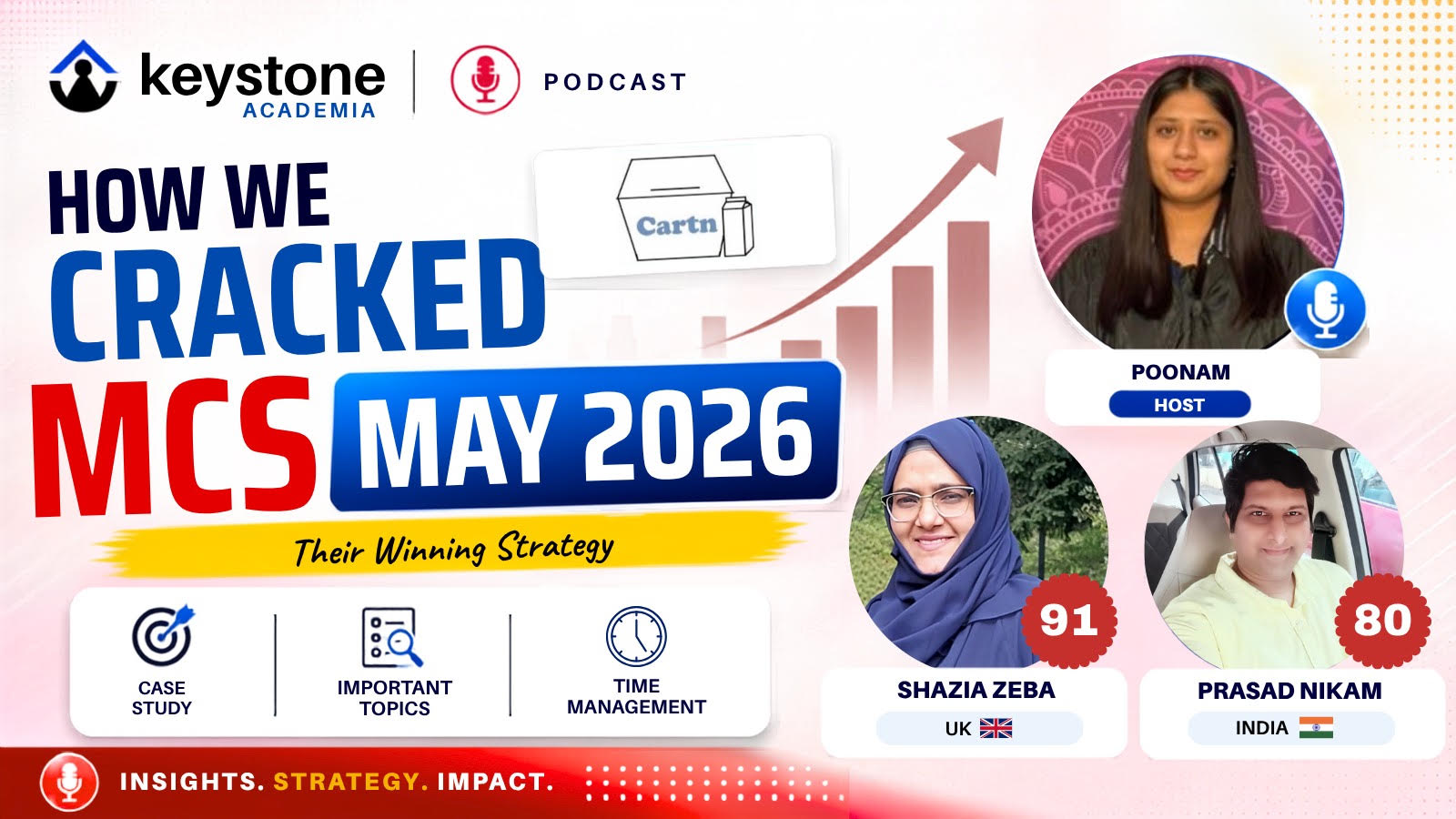
One of the biggest questions students ask is:
Can I pass the CIMA Management Case Study in just four weeks?
The answer is yes, provided you already have a reasonable understanding of the Management Level objective tests and commit to consistent, focused preparation.
Both Shazia and Prasad followed structured study plans rather than studying randomly each day. Their advice was simple:
“Study smart, not just long.”
Consistency beats occasional marathon study sessions.
If you work full-time, aim for:
- Weekdays: 2 hours of focused study
- Weekends: 3 to 5 hours
Quality matters far more than simply counting hours.
Week 1 – Understand the Business Before Anything Else
Most students jump straight into technical revision.
This is a mistake.
Your first priority should be understanding CARTN as a business.
Spend this week building your knowledge of:
- Company background
- Products and services
- Manufacturing operations
- Supply chain
- Financial performance
- Strategic objectives
- Business risks
- Industry trends
- Competitors
- Stakeholders
At the same time, begin revising F2, especially areas relating to financial reporting and interpretation.
By the end of Week 1 you should comfortably answer questions such as:
- What makes CARTN profitable?
- What are its biggest operational risks?
- Where could costs increase?
- Which external factors affect the company?
- How would a Finance Manager improve performance?
Week 2 – Master E2, P2 and F2 Together
Many students study each subject separately.
The MCS exam does not.
Every requirement integrates knowledge from all three pillars.
Instead of asking:
“What topic is this?”
Ask:
“How would a Finance Manager solve this business problem?”
During Week 2 focus on:
E2
- Leadership
- Change management
- Project management
- Digital transformation
- Innovation
- Organisational culture
Think about how each topic applies specifically to CARTN.
P2
Focus on practical application rather than calculations.
Important areas include:
- Budgeting
- Cost management
- Variance analysis
- Investment appraisal
- Pricing decisions
- Performance measurement
- Risk management
Every answer should relate back to improving business performance.
F2
Both passed students agreed this is where many candidates lose marks.
Key areas include:
- IFRS principles
- IAS standards
- Revenue recognition
- Asset valuation
- Financial statement analysis
- Business valuation
- Cost of capital
- WACC
- Financing decisions
Do not try to memorise accounting standards word for word.
Instead, understand why the standards exist and how they affect business decisions.
The examiner rewards application rather than memorisation.
Why F2 Deserves Extra Attention
Shazia described F2 as the most technically demanding area of the syllabus.
However, it is also one of the easiest areas to score well if you understand the underlying concepts.
Unexpected technical topics can appear in the unseen material.
For example:
- WACC
- Lease accounting
- Revenue recognition
- Impairment
- Foreign currency
- Capital investment
Do not panic if you see something unexpected.
Instead ask yourself:
“How does this affect CARTN financially?”
That simple mindset often leads to stronger answers.
The Power of Mock Exams
One message came through repeatedly during the podcast.
Mock exams are where real learning happens.
Reading notes creates familiarity.
Writing mock exams creates competence.
Successful students do not simply read model answers.
They:
- Write full responses
- Receive feedback
- Identify weaknesses
- Improve structure
- Repeat the process
Every mock teaches something new.
How Many Mock Exams Should You Complete?
There is no magic number.
However, students who perform well usually complete multiple timed mocks before exam day.
The important point is not simply attempting mocks.
It is reviewing every piece of feedback.
After each mock ask yourself:
- Did I answer the requirement?
- Did I support my recommendation?
- Did I use evidence from the preseen?
- Did I explain why?
- Did I finish on time?
Improvement comes from reflection.
Stop Memorising Model Answers
One of the biggest mistakes discussed during the podcast was trying to memorise answers.
Students often think:
“If I memorise enough mock solutions, something similar will appear.”
Unfortunately, that rarely happens.
Every unseen introduces new information.
Even if the topic is similar, the business context changes.
Instead of memorising answers, memorise:
- Business frameworks
- Financial logic
- Risk analysis
- Commercial thinking
- Professional writing style
These skills transfer to every unseen scenario.
Learn to Think Like a Finance Manager
Remember, you are not writing as a university student.
You are writing as the Finance Manager of CARTN.
Every recommendation should answer questions such as:
- How does this improve profitability?
- What risks should management consider?
- What are the financial implications?
- What are the stakeholder impacts?
- What implementation challenges exist?
- How will success be measured?
Thinking commercially immediately improves answer quality.
Balance Quantity with Quality
Many candidates worry about word count.
Writing more does not necessarily score more.
Instead, focus on writing:
- Relevant points
- Clear explanations
- Business justification
- Practical recommendations
- Logical conclusions
Every paragraph should add value.
Avoid repeating the same idea in different words.
Develop a Professional Writing Style
Strong MCS answers are:
- Structured
- Professional
- Evidence-based
- Commercial
- Balanced
Instead of writing:
“Costs may increase.”
Write:
“Raw material inflation could increase production costs, reducing gross profit margins. Management should consider long-term supplier agreements and continuous cost monitoring to minimise the financial impact.”
Notice the difference.
The second answer explains:
- What
- Why
- Impact
- Recommendation
Exactly what the examiner wants.
Use Business Frameworks Naturally
Frameworks should support your answer, not dominate it.
Useful frameworks include:
- SWOT
- PESTEL
- Porter’s Five Forces
- Mendelow Stakeholder Matrix
- Value Chain
- Risk Matrix
- Balanced Scorecard
- Ansoff Matrix
Do not force frameworks into every answer.
Use them only when they strengthen your recommendation.
Build Exam Confidence
Almost every successful student experiences doubt before the exam.
Feeling nervous is completely normal.
Confidence comes from preparation.
Every completed mock exam builds confidence.
Every review of the preseen increases familiarity.
Every technical topic you understand reduces anxiety.
Trust your preparation.
Continue Your Preparation
Download our FREE CIMA MCS Mock Exam
Join our CIMA WhatsApp Community
Watch the full Passed Students Podcast
Visit Keystone Academia
Coming in Part 3
- The exact 3-hour exam strategy
- How to divide time between 60% and 40% tasks
- The biggest mistakes students make on exam day
- Managing stress and exam anxiety
- Frequently Asked Questions about the CIMA MCS August 2026 exam
- Final revision checklist before exam day
- Complete list of resources for August 2026 students